
Spinal Vascular Disorders
Spinal Vascular Disorders
Spinal vascular disorders are conditions that affect the blood vessels supplying or surrounding the spinal cord. Abnormalities in these blood vessels can sometimes interfere with normal blood flow or cause bleeding around the spinal cord, potentially leading to neurological symptoms. Early evaluation and accurate diagnosis are important for understanding the condition and preventing further complications.
Our specialized care focuses on detailed neurological and vascular assessment, accurate diagnosis, and individualized treatment planning for patients with spinal vascular disorders. The treatment approach depends on the type, location, size, blood-flow characteristics, and overall clinical condition of the patient.
Conditions We Manage
- Spinal Arteriovenous Malformation (AVM)
- Spinal Dural Arteriovenous Fistula (dAVF)
- Spinal Vascular Malformations
- Spinal Cord Hemorrhage
- Abnormal Spinal Blood Vessels
- Vascular Lesions of the Spinal Cord
- Complex Spinal Vascular Disorders
- Previously Treated or Recurrent Vascular Conditions
Comprehensive Evaluation & Treatment
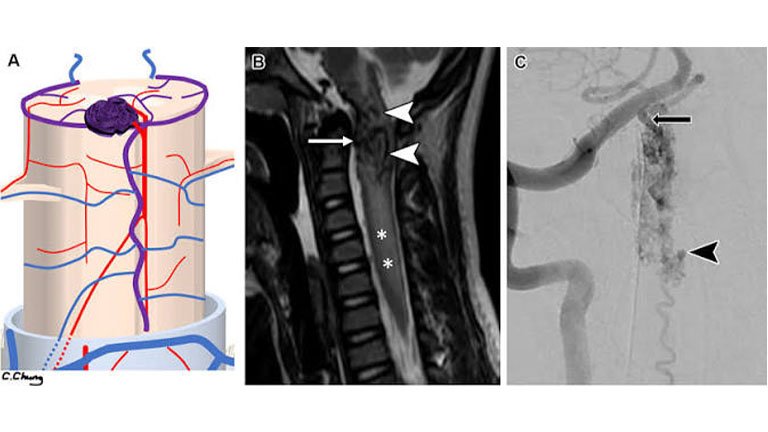
Diagnosis may involve detailed neurological assessment and advanced imaging such as MRI, MR angiography, CT angiography, or spinal angiography. These investigations help identify the location and characteristics of abnormal blood vessels and assist in developing an appropriate treatment plan.
Depending on the individual condition, management may include careful observation, medical care, endovascular procedures such as embolization, surgical treatment, or a combination of approaches. Treatment is planned according to the specific vascular abnormality, its location, symptoms, and potential risks.
Importance of Early Evaluation
Spinal vascular disorders may cause progressive or sudden symptoms such as back pain, weakness or numbness in the limbs, difficulty walking, changes in sensation, bladder or bowel problems, or other neurological difficulties. Timely specialist evaluation can help identify the underlying vascular condition and guide appropriate management.